
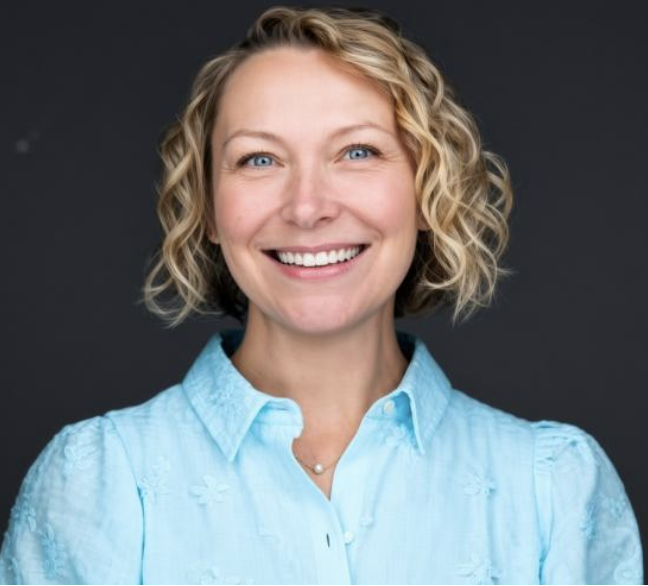
Carrie Allen
Founder & CEO of the Holistic Health Hub • Whole-Person Health Advocate • Community Builder
As I built a business around energy healing, I met extraordinary practitioners who kept running into the same question I was asking:
How do we find our people?
Someone might be looking for exactly the kind of care one of us offered, yet have no idea what to search for or whom to trust. And those of us trying to help were scattered across separate websites, professional circles, and ways of talking about health.
“Wouldn’t it be wonderful,” I wondered, “if someone could find a cardiologist and an energy healer under the same umbrella?”
A friend and I began playing with the idea of a directory. We soon discovered how much work lay between imagining one and building one.
Then I met Carrie Allen.
As Carrie described the Holistic Health Hub, her passion and grounded vision were unmistakable. She was building the directory I had wished existed. But she had arrived at the idea by a different route: I had imagined it as a practitioner who wanted to be found. Carrie had imagined it as a person trying to find the right help.
That difference changed the scale of the question.
Carrie had spent time navigating complex health needs for herself and her family. She knew what it was like to gather information from different places, search for practitioners, keep track of what each person knew, and try to connect the dots herself.
Finding a practitioner was only one piece of the work. A person also needed enough information to understand their options, a way to decide what might fit, and some continuity as their needs changed.
I recognized the vision immediately. I had also been watching what happens when the person seeking care is left to serve as researcher, translator, record keeper, and coordinator of their own health.
Carrie was asking: What would we build if we took that person’s work seriously?
Her answer is taking shape in the Holistic Health Hub. Its directory helps people discover practitioners and resources. Its library offers plain-language introductions to health topics and healing approaches. The Wellbeing Concierge adds a human partner to the search for support, with technology assisting the work. Carrie and her team are also developing a personal organizer intended to help people keep more of their health information and resources together.
I love the ambition of that last piece. Imagine being able to see a specialist’s note, remember the course that helped you understand a symptom, find the contact details of a practitioner you trusted, and keep track of what you want to ask next—all as parts of your health journey. That is the future Carrie is working toward. She is giving it practical form, piece by piece.
Carrie brings years of experience building and growing organizations to this work. Her career has spanned marketing and operations leadership across several industries; now she is applying that skill to a problem with enormous human stakes. She can talk through the infrastructure a platform needs and, in the next breath, explain why a person should be able to find someone who listens to them.
What strikes me most is how comfortably she holds several perspectives at once. She understands why clinical expertise matters, and why a person’s health may also involve relationships, environment, emotions, and spiritual life. She sees the practitioner who needs a way to reach the right people. She sees the person seeking care, who may be tired, overwhelmed, or unsure what kind of help to look for. And she sees the work required to bring those people together.
The Hub’s manifesto leaves room for exploration and discernment. It welcomes different perspectives and returns authority to the person making decisions about their own care. That is a meaningful foundation for a directory spanning many kinds of practitioners: people need information and connection, and they need room to choose.
I have felt the effect of Carrie’s work personally, even before the full platform she envisions exists. For a long time, I wondered whether my vision of healthcare had a place to go. I wanted clinical knowledge, lived experience, curiosity, and holistic care to be able to inform one another. Meeting Carrie showed me that someone else saw the gap—and was willing to gather people, build technology, and keep working through the difficult details.
She made my own vision feel more legitimate.
Carrie speaks boldly about rebuilding healthcare. I trust the seriousness of that ambition because I see how she approaches it: she talks with practitioners, listens to people navigating care, brings together collaborators with different skills, and asks for help. She also pays attention to the life she is living while she builds. Her reminder to herself—“I will not burn out building a wellness business”—belongs in the vision, too. A system meant to support whole people should be built by people allowed to remain whole.
Carrie’s work began with a need many of us know intimately: There must be a way to make all of this easier to find, understand, and carry.
She is bringing people together to make one.
Explore the Holistic Health Hub to discover practitioners, learn about your options, and see what Carrie and her team are building.