
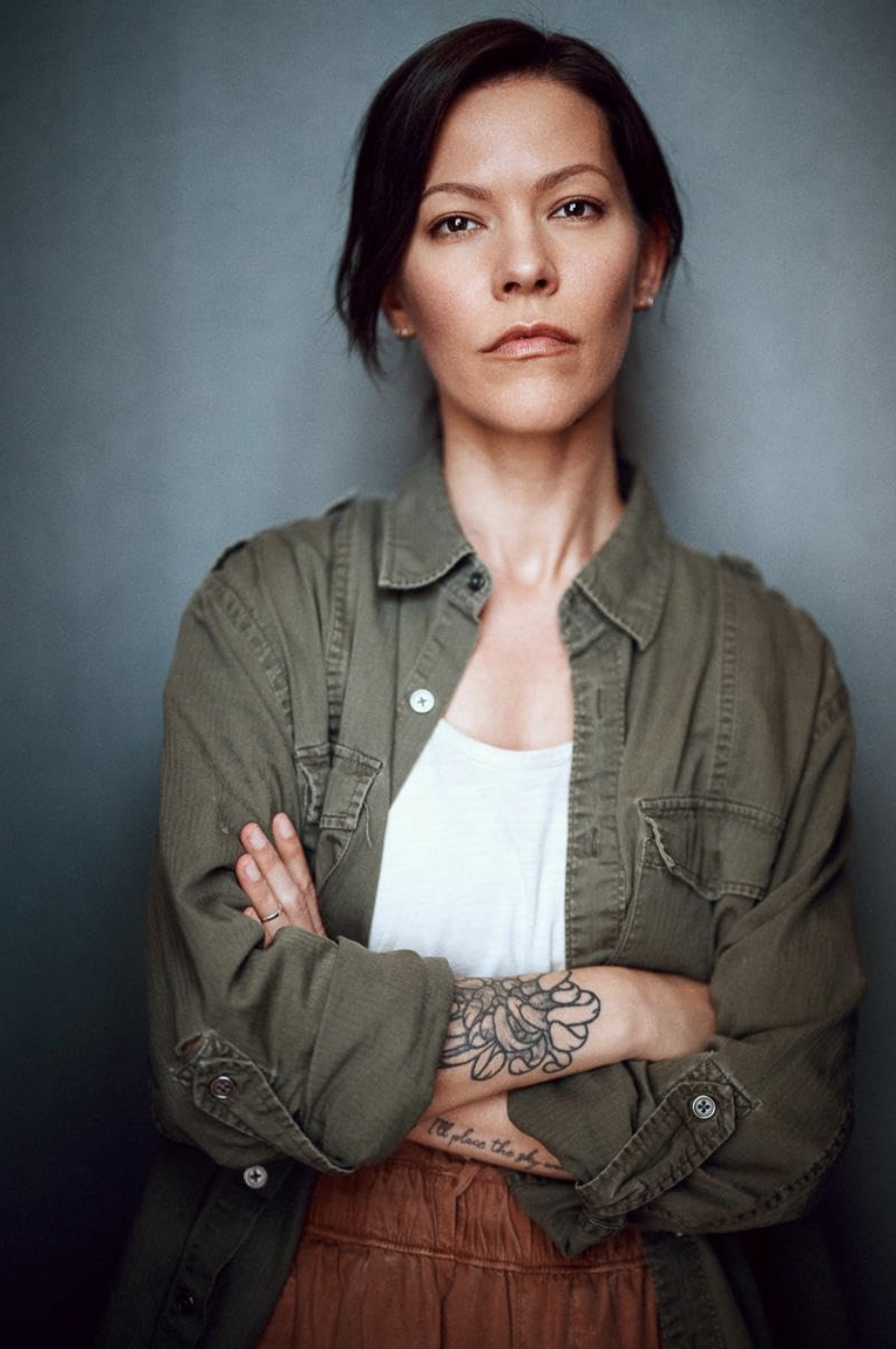
Kristina Ellery
Minister of Sacred Earth Sanctuary • Breathwork Facilitator • Herbalist • Creature Performer • Creator
One day, I may have volumes to write about the questions, healing, and transformation that led me into the world of psychedelic medicine. For now, as I complete my certificate studies in psychedelic-assisted therapies and continue developing the language this work deserves, I want to begin more simply: with the story of how I came to know Kristina Ellery and why her example has shaped my understanding of what responsible stewardship can look like.
My path toward this work began, unexpectedly enough, in the diabetes clinic.
Through my clinical work with GLP-1 medications, I became fascinated by the ways a drug can alter more than physiology. I saw how medication might affect appetite, certainly, but sometimes also desire itself: what a person wants, how compelling that wanting feels, and what behaviors follow. That observation opened a much larger question for me. What other substances might create change not only in the body or mood, but in desire, behavior, perception, and our sense of what is possible?
Curiosity led me into psychedelic research literature, documentaries, and conversations with other healthcare professionals who were asking similar questions. Eventually, a friend who is a psychiatric nurse practitioner asked whether I had heard of Sacred Earth Sanctuary, an Amesbury church that had been featured in Boston Magazineas part of a story about New England’s evolving psychedelic landscape.
I had heard rumors, but I had never followed the thread.
That thread led me to Kristina Ellery, minister of Sacred Earth Sanctuary.
Kristina approaches the world of sacred plant medicine with tremendous care and deep compassion for those who seek out the church. What most impresses me is not an inflated claim to certainty, but her practiced awareness of responsibility. She appears to understand that guiding people through vulnerable inner terrain requires reverence, preparation, discernment, community, and a willingness to recognize the limits of any one person’s role.
Her stewardship is visible in both the broad structure of her work and its smallest details. Sacred Earth emphasizes thoughtful preparation and intention before a ceremony, a grounded and welcoming physical environment, and opportunities for integration afterward. Kristina draws upon her experience with breathwork and herbalism,
incorporating elements such as intentionally selected music, herbal tea, essential oils, nourishing food, and community integration gatherings.
And then there is Kristina’s vegetable soup.
It is warm, abundant, and capable of bringing me back to life. It does not ask me to interpret anything, integrate anything, or become a more evolved person before accepting the bowl. It simply welcomes me back into my body and reminds me that even after our most extraordinary encounters, healing may look like being fed.
What particularly fascinates me about Kristina is the gorgeous line she walks between holding sacred space and making monsters.
Kristina appeared as the zombie Titicaca in AMC’s The Walking Dead: Dead City. For her fortieth birthday, she transformed the conventional milestone party into an Enchanted Forest Zombie Attack. In her aptly named Monster Class, she invites participants into creature performance and embodiment: exploring how an unfamiliar being might breathe, move, inhabit space, and make itself known through the body.
These are not isolated eccentricities. Again and again, Kristina finds ways to approach what other people might find frightening, grotesque, or strange and reveal its beautiful humanness.
She does not make the monster beautiful by sanding away its teeth. She becomes curious about the teeth. She asks what the creature’s body is protecting. How it learned to move. What it hungers for. What intelligence lives inside its strangeness. What becomes possible when we stop recoiling long enough to meet it.
That instinct appears deeply connected to her healing work. Much of what we call shadow is simply what has been exiled from the acceptable story of who we are: grief too enormous, anger too unruly, desire too inconvenient, fear too unsightly, need too vulnerable. We may approach these parts of ourselves as monsters to defeat, cure, or conceal.
Kristina offers another possibility. What if the strange thing inside us does not need to be vanquished? What if it needs enough safety to take form, move through the room, and show us its beautiful, aching humanness?
Her creative life does not feel separate from her spiritual work. Her acting, stage-makeup artistry, elaborate themed gatherings, creature embodiment, and healing spaces all seem to emerge from the same willingness to explore the depths of her own being and return carrying something alive.
I believe that willingness is part of what allows Kristina to remain steady in the presence of other people’s complexity. She does not stand safely on the shore and call instructions into the darkness. Nor does she present herself as someone who has transcended the difficult, contradictory work of being human. She has cultivated an ongoing relationship with her own shadow and light—and allows that relationship to deepen both her care and her creativity.
I am grateful to know Kristina and for the ways her example has expanded my understanding of healing, responsibility, and creative life. She reminds me that stewardship is not control, certainty, or spectacle. It is the patient work of creating conditions in which another person can encounter themselves while remaining surrounded by care.
The person who helps us approach the depths should know something about returning.
Sometimes we return with insight. Sometimes we return with a monster who was human all along. And sometimes, mercifully, we return to a bowl of vegetable soup.
Learn more about Kristina and Sacred Earth Sanctuary.
Watch Kristina’s interview on The Passion Witch Project.