
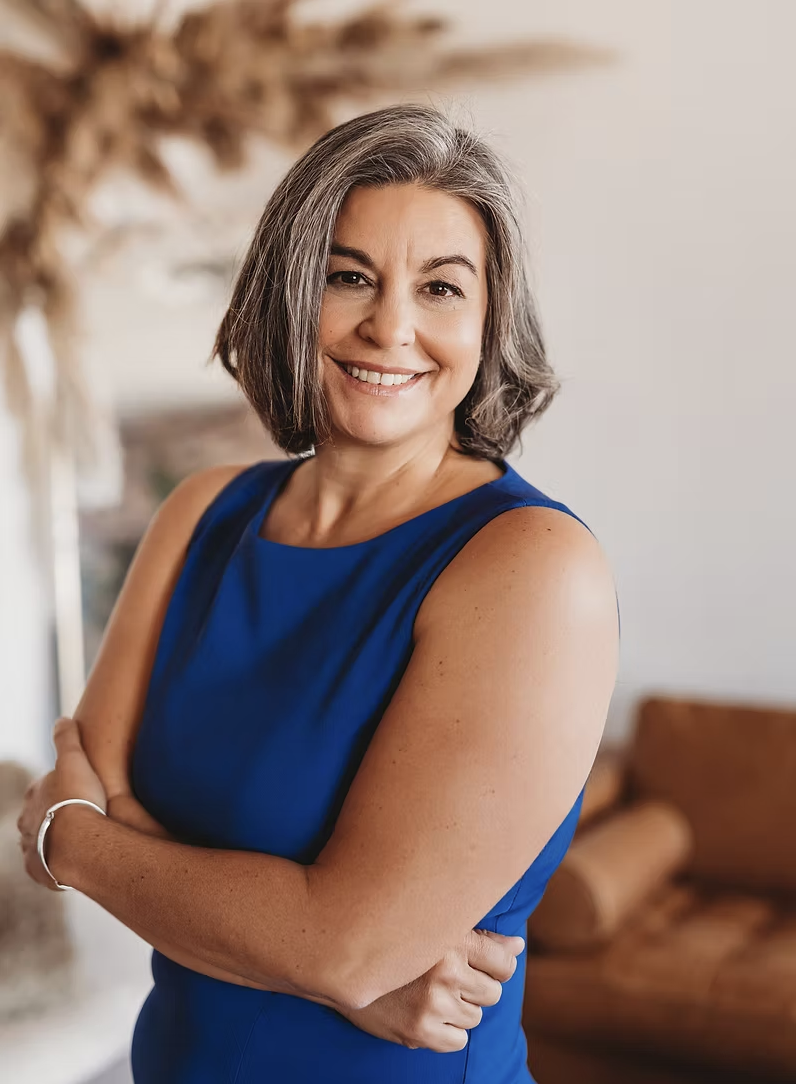
Lorraine Connell
Educator • Leadership Coach • Speaker • Founder of Peers Not Fears and Speak Boldly
I have been thinking recently about how pieces of us can become stranded in particular moments of our lives. They linger like ghosts with unfinished business, wandering the same old hallways and carrying the identities, beliefs, and survival strategies that once helped us endure. They are not trying to haunt us. They are waiting for someone to find them, listen to what they have been carrying, offer them some love—and help them graduate.
I had this experience with Lorraine Connell. Lorraine is a veteran educator, leadership coach, author, speaker, podcast host, and the founder of both Peers Not Fears and Speak Boldly.
After more than twenty years in the classroom, she recognized a profound gap: students were expected to demonstrate leadership, but few adults were intentionally teaching them how to lead. She created Peers Not Fears from the belief that leadership is not an inherited trait reserved for the charismatic, accomplished, or naturally confident. It is something young people can learn and practice in the ordinary moments of their lives. Her programs help students develop confidence, communication, emotional awareness, resilience, and self-trust—not through competition, but through connection.
Her own language is telling. Lorraine believes every young person is already a leader, even when they do not yet recognize themselves as one. Her work is designed to help students feel “seen, heard, and capable” and to grow without fear or comparison.
This belief extends far beyond the classroom. I was fortunate to be a guest on Lorraine’s podcast. In preparation for our conversation, she asked me to reflect on who I had been in high school, what I do now, and what I would want a current high school student to know.
I sat with the delightful absurdity of having gone from valedictorian of my high school class to a woman who sometimes wears a pink witch hat in public.
On the day of the interview, I initially tried to record from my colorful healing space. Unfortunately, that space possesses many wonderful energetic qualities and notoriously terrible Wi-Fi. I fumbled around looking for enough service to sustain a conversation while Lorraine waited with extraordinary patience.
Once we began, she asked about my high school experience with such tenderness and curiosity that seventeen-year-old Emily entered the room. That version of me had been extraordinarily accomplished. She had also been hypervigilant, deeply isolated, and terrified of discovering that she might fail at something she could not control through relentless effort. She had leaned on academic achievement to become her entire identity because it felt safer than risking rejection somewhere less measurable.
Beneath the valedictorian’s robes was a lonely girl who had made herself small in nearly every way that could not be graded. Lorraine gave her somewhere to speak.
She did not dismiss my accomplishments or reduce them to a trauma response. She simply became curious about what they had cost me. Her patient questions and steady presence allowed that younger self to tell the fuller story: not only what she had achieved, but what she had feared, needed, and survived.
During that conversation, my high school self was released from a job she had been performing for decades. She did not need to disappear. She needed to be witnessed. She needed to know that I had grown into a woman capable of carrying the life she had worked so hard to secure—and that achievement no longer had to be our only route to safety, identity, or belonging.
This is part of Lorraine’s medicine. She finds the selves who have become trapped inside other people’s labels—or inside the labels they created for themselves. The smart one. The shy one. The class clown. The difficult one. The good girl. The person who is not “leadership material.”
Lorraine’s work begins with a refusal to mistake a label for a destiny. On her website, she writes about watching capable students remain silent, get overlooked, or internalize identities that restricted their potential. Peers Not Fears grew from her conviction that leadership develops through real-world practice rather than titles or permission.
Her podcasting work carries that curiosity into story. Again and again, Lorraine speaks with people about the younger selves they once were, the challenges that shaped them, and the forms of leadership they later discovered. The archive is filled with stories of loneliness becoming connection, perfectionism becoming purpose, adversity becoming resilience, and people learning to trust voices they had once silenced.
But Lorraine is not interested only in liberating the young person who was overlooked. She is also interested in the grown woman who learned to shrink her sparkle to fit the life she thought she was supposed to want.
While preparing for her TEDx talk, Lorraine booked a venue and invited several friends to watch her practice. What those women did not know was that Lorraine would invite them onto the stage, too, and ask them to share their own stories. Those stories became Speak Boldly.
Speak Boldly has grown into a movement and live showcase where women step onto a stage before a compassionate audience and tell stories of suffering, liberation, triumph, and becoming. Lorraine’s work with Peers Not Fears and Speak Boldly may appear to serve different populations, but they spring from the same conviction: leadership begins when people are invited to use their voices before they feel perfectly ready.
In sold-out rooms across the Seacoast, women speak about the experiences that once made them feel ashamed, alone, diminished, or powerless. Their stories touch something in everyone listening. One woman’s truth gives another woman language. One woman’s courage makes another woman’s courage more imaginable.
The healing does not occur only onstage. It moves through the room. Women witness one another and recognize themselves in lives that look nothing like their own. The audience is not there merely to applaud a performance. They are participating in an act of collective liberation.
Lorraine facilitates that healing through her patient and poignant questions, her generous invitations, and her willingness to go first. She knows how to sense the story beneath the polished answer. She knows how to wait while someone searches for the words. And she knows that asking a person to speak is most powerful when the invitation is accompanied by genuine curiosity about what they might say.
Lorraine does not give people a voice. She begins with the assumption that they already have one. Then she asks the question, opens the room, and makes it safer to be heard.
Some parts of us do not need to be corrected, transcended, or left behind. They need to finish telling the story that was interrupted. They need a compassionate witness. They need to see who we became.
And sometimes, after years of wandering those old hallways, they need a microphone, an audience, and permission to graduate.
With Lorraine, every version of you is invited to speak—and no version of you has to remain trapped inside an old story.
Learn more about Lorraine’s leadership programs, podcast, and speaking at peersnotfears.com, and explore the Speak Boldly movement at speakboldlyshowcase.com.